 Cruise to St Lucia
Best Time to Cruise to Saint Lucia
Timing is the quiet half of a Caribbean itinerary, and the best time to cruise to St Lucia is a narrower window than the brochures suggest. Saint Lucia sits close enough to the equator that the calendar never changes the warmth - highs hold between about 28 and 32°C (82-90°F) all year - and always changes the risk: when the rain falls, how hard the sea runs, and whether a shore day gets blue skies or a tropical burst. This guide reads the island's seasons from the one vantage that matters for a cruise call: what each month does to the eight or nine hours you have in port. Every stop named here is priced in the St Lucia shore excursions compared on this site.
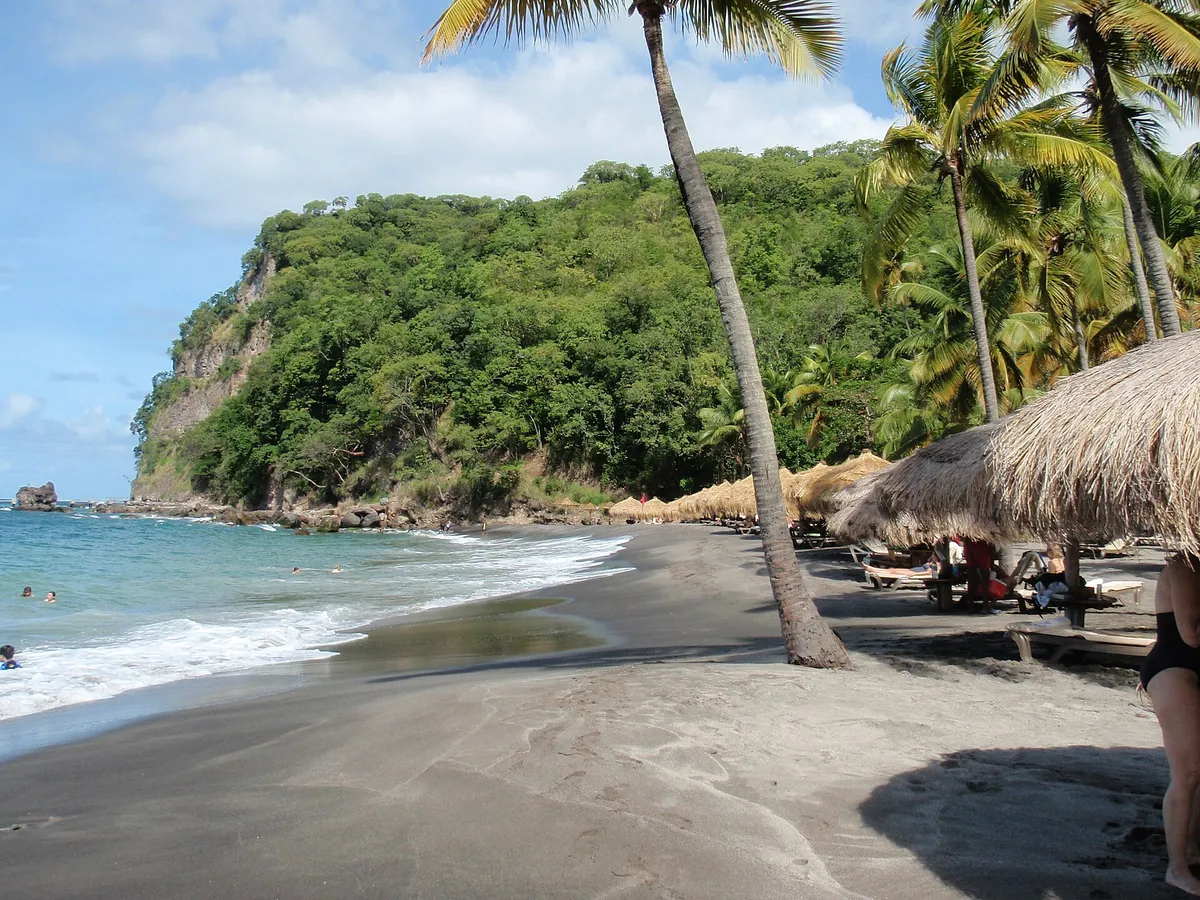
Dry-season light over a leeward bay: the pattern most sailings to Castries are built around. Photo: XeresNelro, Wikimedia Commons, CC BY-SA 4.0.
Quick answer Dry season wins the port day; May-June wins the trade-offs - and September-October is the honest no
December through May is the dry season and the best window for a Saint Lucia port day: showers are brief, the sea state on the west coast stays catamaran-friendly, and the mid-December to mid-April peak trades bigger port crowds for the most reliable blue. May and June are the connoisseur's months - warm seas, thinner crowds, lower prices and the island's Jazz festival in early May. September and October sit at the wettest and highest hurricane-risk point of the Atlantic season (official season: June through November): cruise ships still call, but rain bursts are longer and a fogged-in port day is a real possibility. Heat never varies much; rain, wind and Carnival crowds do.
Key takeaways
- Port day first, island second: the shore excursions compared on the homepage each state how they handle weather - the boats and tours that run wet or shine
- Traveling September-November? Read how the cruise port day changes before booking anything long
- Whale and dolphin trips run year-round but peak October-February - see the whale watching cruise listing
The Two Seasons That Actually Matter
Saint Lucia has no winter. What it has is a dry season, December to May, when the trade winds hold, showers come in fast overnight or dawn bursts and clear by coffee, and the high season - mid-December to mid-April - stacks the island with escaped northern winter. And a wet season, June to November, when rain still mostly arrives in short heavy bursts rather than all-day greyness, the rainforest goes properly lush, waterfalls run loud, and hotel prices fall to half their February rate.
The Atlantic hurricane season officially spans June through November, and while direct hits on Saint Lucia are historically rare - the island sits at the storm belt's southern edge - the outer bands of Caribbean systems in August through October can close a port day entirely: tenders pause, and the famous west-coast seas that carry every catamaran tour turn choppy.
For a cruise passenger the practical reading is this: the dry season is the safe bet, the shoulder months are the value bet, and the September-October tail of hurricane season is a bet at all - still sailable, still booked, but the month you read the ship's weather updates for.
Saint Lucia Month by Month
Average daytime highs at sea level in Celsius with Fahrenheit underneath, and the season bands that shape a port day. The thermometer barely moves; what moves is rain, wind and crowds.
Temperature averages compiled from published Saint Lucia climate normals (Castries area, sea level); the chart reads port-day suitability, not beach-towel comfort.
Month by Month, From a Port Day's Point of View
January - Peak season, and it feels it: dry, breezy, the busiest pier in the Caribbean winter and the highest excursion prices. Book tours ahead; the walkable-day crowd can lean on the port guide.
February - The driest, most reliable month on the calendar. Everything runs: catamarans, the Gros Piton hike, whale trips building toward their October-February peak. Book everything early anyway.
March - More of February's dry with slightly longer days; spring-break ships stack some weeks. Seas stay friendly on the west coast.
April - The last easy month before the wet: warm seas at their clearest, crowds thinning after Easter. The quiet sweet spot for a first Saint Lucia call.
May - Value returns. The St Lucia Jazz and Arts Festival fills early May at Pigeon Island, hotel rates drop, and the first real showers are short. One of the two best value months.
June - Officially wet season and officially hurricane season, but early June behaves like late May. Green island, warm sea, short bursts - and the Sulphur Springs mud bath is never weather-dependent.
July - Lucian Carnival: street parties, steel bands and costumes through the month, heaviest around mid-July. Port days are festive, rooms scarce on land, rain bursts routine.
August - Wet and building storm risk. Rain bursts run longer; the forest and waterfalls are at their fullest. Excursions run, but pick operators with clear wet-weather policies.
September - The statistically wettest, storm-peak month. Ships still call - and on a clear September day you may share the Pitons with nobody - but have a beach-and-town fallback planned.
October - The other storm-peak month, and the start of whale-watching's best stretch. Same advice as September with the sea warming further.
November - The risk curve bends down, the rains taper, and the island is still green and quiet. Prices low; a fine month for travellers who like the island to themselves.
December - Dry season arrives with the holiday fleets: the pier at its busiest, everything open, everything booked - plan the shore excursion weeks ahead, not days.
The Month Table
The same twelve months as a comparison: what the sky does, what the sea does, and what it costs you. Rain figures are tendencies, not promises - the wet season's bursts rarely cost a whole port day; a storm-outer-band can.
| Month | Rain tendency | Sea state | Port-day verdict |
|---|---|---|---|
| January | Low | Calm-moderate | Prime - book tours early |
| February | Lowest | Calm | Prime - driest skies |
| March | Low | Calm | Prime - spring-break crowds |
| April | Low | Calm, clearest | Prime - post-Easter lull |
| May | Low-moderate | Warm, calm | Best value - Jazz festival |
| June | Moderate | Warm | Good - watch the forecast |
| July | Moderate | Warm | Good - Carnival energy |
| August | High | Building swell | Caution - storm season builds |
| September | Highest | Choppiest | Caution - storm peak |
| October | High | Choppy to settling | Caution - whale season starts |
| November | Moderate | Settling | Good - green and quiet |
| December | Low | Calm | Prime - holiday fleets return |
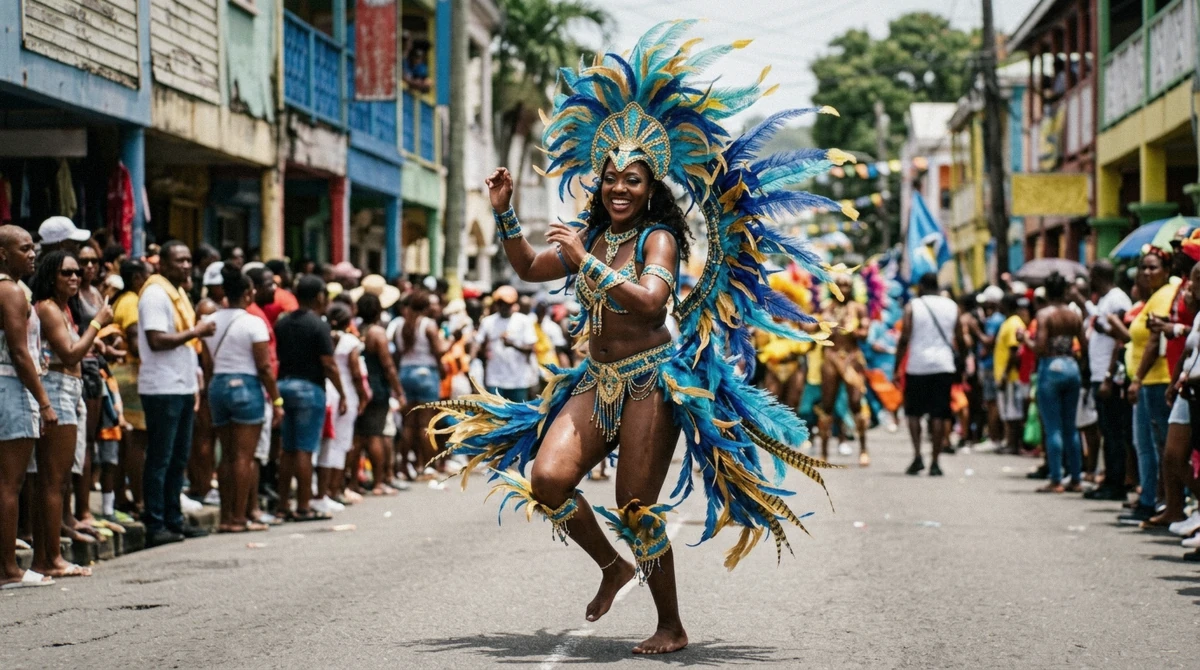
Lucian Carnival lands in July: the month the island's streets, not just its water, become the attraction. Editorial illustration generated for this guide.
Festivals That Move the Calendar
Two events reshape a port day. Lucian Carnival runs through late June into July, with its street parties, Panorama steel-band showdown and costume parades centred on Castries - a July call during Carnival week means packed roads around the parade routes and an island at maximum volume, which is exactly the point if you came for it.
The St Lucia Jazz and Arts Festival plays early May across venues including Pigeon Island National Landmark, bringing international acts and festival pricing early in the shoulder month. Outside those windows the calendar stays local: Friday night fish fries at Gros Islet and Anse La Raye run year-round but matter mostly to overnight visitors, not port days.
Practical note for the festival months: excursions still run on their normal schedule, but downtown traffic and taxi demand spike - build fifteen minutes of margin into anything booked, and expect the Castries Market to be more performance than errand on Carnival days.
How Many Days Are Enough - and What a Single Day Fits
The honest question behind 'how many days is enough in Saint Lucia' for a cruise passenger is the opposite one: what does one day fit? The island rewards longer stays - a Pitons sunrise, a Gros Piton climb, a Soufriere loop and a Rodney Bay beach week all want separate days - but a port day is a single-digit-hours problem, and the seasons change what fits inside it.
In the dry season, a day stretches: a full west-coast loop (volcano, waterfall, mud bath, Pitons and a swim) runs comfortably, boats ride calm seas, and even the road-bound tours keep to schedule. In the wet season, the same day compresses: rain bursts eat the slow moments, streams rise on the trails, and the wise booking leans sea-based - a catamaran or speedboat keeps its schedule in weather that strands a van.
So the month you sail and the tour you book are one decision, not two: the excursion comparison on the homepage lists duration, platform cancellation terms and weather notes for each listing, and the best-pick logic weighs ship guarantees against independent flexibility - which matters most exactly in the shoulder and storm months.
The Months Best Avoided - and How to Sail Them Anyway
September and October are the months Saint Lucia veterans hedge: the statistical peak of Atlantic storm season, the wettest skies, and the only stretch where a port day can genuinely be swallowed by weather. They are also the greenest, quietest, cheapest months, with whales arriving offshore - a trade, not a write-off.
Sailing them well takes three adjustments. Book sea-based excursions over road tours: the catamarans and speedboats operate closer to schedule in showery weather and their cancellation terms are the clearest on the platform. Choose listings with 24-hour free cancellation and check the ship's own shore-sync policy - a tour cancelled for weather refunds; a day ashore does not. And build the free fallback before you need it: the walkable capital, the market, the beach under half an hour's walk - a port day that stays good even when the famous half of the island stays wet.
One closing number worth keeping: the difference between the best and worst sailing months is not temperature - it is a few degrees and some rain statistics. What actually swings is confidence in the day: the dry season's port days deliver what the itinerary promised, the shoulder months deliver it with better prices, and the storm-peak months deliver it often enough to be worth the fare - with the planning this page and the comparison table exist to supply.
Sea State: The Variable the Thermometer Hides
Temperature barely moves in Saint Lucia; the sea's mood is the climate variable that actually runs a shore day. The winter-spring dry season trades the trade winds at their steadiest: the west coast sits in their lee, the catamaran runs deck-flat, and the channel that carries the whale cruise stays glassy in the mornings. The summer wet season loosens the pattern - longer swells arrive from distant systems, the exposed reaches build texture by afternoon, and the morning departure stops being a preference and becomes the strategy.
What that means by listing: the boat days (catamaran, speedboat, whale cruise) want the morning slots in every month and the calm-season months most of all; the snorkel stops shine in the clear-water shoulder months of April-May and October-November, after the trade-wind churn settles; the land formats barely notice, which is why the wet-season port day leans road - the mud bath does not care what the channel is doing.
And the swim-beach reading: Reduit and Vigie swim easiest December through May; the summer's warmer water compensates for the texture until the storm months, when the sea, not the sky, is the reason the day has a plan B.
Storms, Honestly: The Record and the Risk
The hurricane question deserves better than brochure weather, so here is the record. Saint Lucia sits at the Caribbean chain's southern edge, and direct major-hurricane hits are historically rare - but rare is not never, and the island's storm history is real. Hurricane Tomas, October 2010, remains the modern reference point: a category-two pass that caught the island late-season, dropped extraordinary rain on already-saturated ground, and killed more than a dozen people while wrecking infrastructure for weeks - a reminder that the failure mode at these latitudes is water as much as wind. Tropical systems short of hurricanes pass closer in most active seasons; Storm-season 2024's Hurricane Beryl tracked just south of the island chain and shut down ports across the region in early July, a reminder that the season's edges, not just its September centre, bite.
For a cruise passenger the honest translation: ships reroute around systems - the itinerary that promised Saint Lucia in a storm week can simply not happen, which is a cruise-line decision made days out. If the island is the trip's whole reason, sail December through July's first half and the risk curve stays low. If the sailing lands in the August-October window, the practical hedges are the ones this site repeats: the most flexible cancellation window at booking, sea-based tours whose operators re-route rather than refund-chase, and a port-day plan B - the walkable capital - that needs no bus at all.
How Far Ahead to Book, by Month
The calendar converted into booking behaviour: when the tours fill, when the prices move, and when the flexible window does the work. Lead times read from the excursion market's usual shape - multi-ship days and festival weeks fill fastest.
| Sailing window | Tour availability | Booking lead | The note |
|---|---|---|---|
| December-April (high season) | Tight - multi-ship days sell out | 3-6 weeks ahead | Prices firm; the early slots go first |
| May-June (shoulder) | Comfortable | 1-2 weeks | Jazz festival week books like high season |
| July (Carnival) | Tight in carnival weeks | 2-4 weeks | Rooms scarce ashore; tours run normal |
| August-October (storm peak) | Loose | Book flexible, late is fine | Keep the free-cancellation window - the hedge is the strategy |
| November (shoulder) | Comfortable | 1-2 weeks | Green island, thinning rain, quiet piers |
Reading the Forecast Like a Port-Day Planner
The tropical forecast reads differently from the temperate one, and the difference decides how much a grey icon should worry you. A 40% rain icon in Castries usually means: showers somewhere on the island, brief, likely missed entirely from a boat deck - the percentage covers area and day, and the island is small enough to hold both sun and shower at once. The useful metrics are the ones ports publish: the seas forecast (swell height and period - the numbers that move boats), and the tropical outlook during the storm season, which is the only forecast that cancels ports.
The practical stack for a cruise week: the ship's shore team posts port weather 24-48 hours out - trust it over any app, it carries the local reading; the wind forecast matters more than the rain one for every listing on this site's comparison; and the morning-vs-afternoon split is the traveller's own lever - nearly every weather variable in the tropics improves before ten and degrades after two.
Which converts the forecast from a mood into a schedule: book the early pickup, hold the flexible window, and let the afternoon be the part of the day the weather gets to keep.
Best Time to Cruise Saint Lucia: Questions
What is the best month to visit Saint Lucia?
For weather and reliability, February - the driest, calmest month of the dry season. For value with nearly as good weather, May and early June, when crowds thin, rates drop and the Jazz festival plays. For festivals, July's Carnival has no rival.
What months are best to avoid in Saint Lucia?
September and October carry the highest combination of rainfall and Atlantic hurricane risk - ships still call, but shore plans deserve a wet-weather fallback. If your sailing lands in those months, favour sea-based excursions with free cancellation and keep a walkable-town plan in reserve.
Does it rain all day in Saint Lucia's wet season?
Rarely. Wet-season rain typically arrives in short, heavy tropical bursts followed by sunshine - the island is greener, not greyer. The exception is the outer band of a Caribbean system, which can close a port day entirely in August through October.
Is the sea rough for boat tours in the wet season?
The west coast sits in the lee of the trade winds and stays manageable most of the year; the swell builds mainly with passing systems in August-October. Catamaran operators cancel or re-route on unsafe sea states - another reason to book listings whose cancellation terms you have actually read.
When is whale and dolphin watching best in Saint Lucia?
October through February is the peak stretch for sightings on the island's whale and dolphin trips, though sailings run year-round and dolphins are a near-year-round companion on the west coast.
How hot does it get in port?
Daytime highs sit between about 28 and 32°C (82-90°F) all year; the difference months make is humidity and cloud, not heat. Any port day needs sunscreen, a hat and more water than feels necessary - the sun burns through overcast as readily as through blue.
Which months have the calmest sea for boat tours?
December through May runs the steadiest west coast, when the trade winds hold and the lee keeps the catamaran water flat; April-May add the year's clearest snorkel water. The summer swell builds texture by afternoon everywhere - the morning departure becomes the strategy - and the storm months roughen the channel with the systems that pass. The sea-state section above reads it in full.